

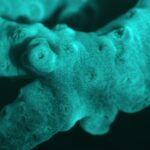
Student Project – Coral Fluorescence Imaging and Spectroscopy
Students in the Walt Whitman High School science research program are using NIGHTSEA gear for research projects in coral reef biology.
read more »
Microplastics Publications Referencing Use of NIGHTSEA Equipment
A growing number of peer-reviewed publications related to microplastics reference use of NIGHTSEA equipment.
read more »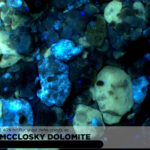
Oilfield Geology and Fluorescence
Fluorescence plays an important role in oilfield geology, the analysis of the cuttings coming out of a well as it is being drilled. Read how NIGHTSEA can help.
read more »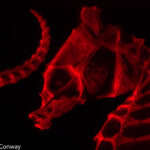
Fluorescence of Cleared and Stained Specimens
We received this beautifully detailed fluorescence image of a seahorse skeleton from Kevin Conway at Texas A&M University. The specimen, a dwarf seahorse (Hippocampus zosterae), was prepared using a technique called ‘clearing and staining’, a method that produces an intact specimen with cartilage stained blue and bones stained red. It is a great way […]
read more »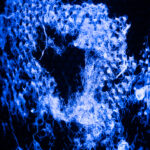
Microfiber Fluorescence
Microfiber fluorescence – An exploration of fibers collected by a filter system attached to a washing machine discharge hose.
read more »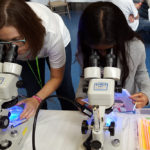
Fluorescence for Education and Outreach
The NIGHTSEA Stereo Microscope Fluorescence Adapter is a great tool for incorporating fluorescence in education and outreach.
read more »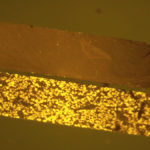
Tetracycline Fluorescence to Visualize Active Drug Distribution in Tablets
Tetracycline fluorescence reveals distribution of active drug compound relative to excipient in a pharmaceutical tablet.
read more »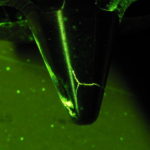
Examples of Blue Light Use in NDT
Customers are using the Model FL5000 flashlight in a variety of ways for their NDT inspection applications.
read more »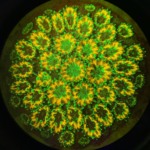
Coral Reef Restoration at Mote Marine Laboratory
Coral reef restoration efforts at Mote Marine Laboratory include new approaches to introducing more resilient corals to the wild.
read more »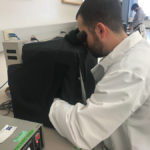
Custom Microscope ‘Dark Tent’ Solves Workflow Challenges
A custom darkness enclosure for a fluorescence microscope solves a hospital hematology lab workflow challenge.
read more »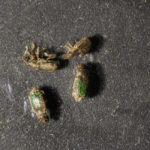
Pest Management Behavior Study with Fluorescent Marking
Understanding insect behavior is critical in developing strategies for pest management. Fluorescent marking and photography enabled a field study of annual bluegrass weevils.
read more »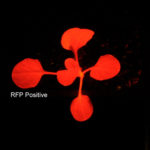
Crop Genetic Engineering and Fluorescence
Crop genetic engineering aims to improve existing crops. Fluorescent proteins as trait markers coupled with fluorescence viewing systems facilitate the research process.
read more »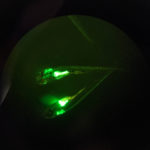
Zebrafish Metabolic Disease Reporters – mCherry and eGFP
NIGHTSEA recently visited Dr. Jessica Dunleavey at the Zaghloul Lab at the University of Maryland Baltimore to determine whether our Model SFA Stereo Microscope Fluorescence Adapter system could be used to screen their transgenic zebrafish. The research group investigates the functions of genes associated with metabolic diseases including diabetes, obesity, and NAFLD/NASH (nonalcoholic fatty liver disease […]
read more »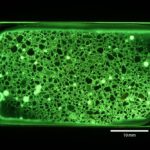
Concrete Thin Section Fluorescence
Fluorescence is a valuable tool in the concrete petrographic world. The NIGHTSEA fluorescence adapter systems can be used with microscopes at a variety of scales for detailed examination of a number of features.
read more »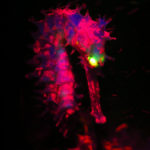
Fluorescence Reveals Hard-To-Find Marine Life
You can’t study what you can’t see – read how researchers used fluorescence as a tool to find cryptic fish species and juvenile corals
read more »Genetics Laboratory Experiment
We try to keep track of publications that cite use of NIGHTSEA equipment. These are mostly research-oriented papers, but we were excited to find a paper in the Journal of Microbiology and Biology Education that describes a laboratory sequence for a sophomore-and-above Genetics course at Rollins College. (Citation and links at the end of […]
read more »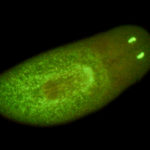
Screening FISH-Labeled Planarian (Schmidtea mediterranea)
Screen planaria (SMED – Schmidtea mediterranea) FISH-labeled samples for successful preparation with the NIGHTSEA Model SFA Stereo Microscope Fluorescence Adapter prior to moving to higher resolution imaging techniques.
read more »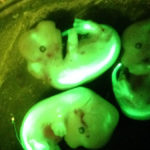
Selecting and Dissecting GFP Mouse Embryos
Implementing fluorescence in a mouse facility to enhance selection and detection.
read more »Checking Fluorescence of Bacterial or Cell Cultures
NIGHTSEA flashlights and microscope adapters can be used with fluorescent bacterial or cell cultures.
read more »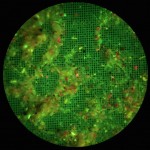
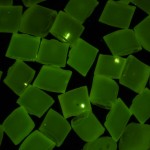
Defect Detection in Nylon Granules
The problem NIGHTSEA was approached by a manufacturer of plastic granules, specifically nylon 6,6. These are small granules, about 2 x 2 x 2.5 mm, that constitute the raw material for injection molding. In-process faults in polymerization can result in the formation of a defect called ‘gel’. This may occur in only a small fraction of […]
read more »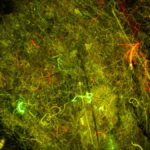
Forensic Sciences and Fluorescence with the NIGHTSEA SFA
The NIGHTSEA SFA turns your existing stereo microscope into a powerful fluorescence screening tool for evidence examination.
read more »Crack and Failure Analysis with Fluorescence
Fluorescence is a valuable tool for failure analysis, helping investigators see what they might otherwise miss. Fluorescence indicators of various types – including fluorescent penetrants, magnetic particles, and other fluorescent dyes – are commonly used to highlight cracks or defects that would otherwise be difficult or impossible to see. The fluorescence makes them stand out […]
read more »
Pre-Screening Samples for Fluorescence
The NIGHTSEA Model SFA Stereo Microscope Fluorescence Adapter can turn your routine laboratory stereo microscope into a valuable tool for pre-screening your sample preparations for fluorescence before moving on to higher resolution systems.
read more »Detect Calcein-Stained Fish
The NIGHTSEA Royal Blue excitation sources, combined with the appropriate barrier filters, are proven gear for detecting the green fluorescence of calcein-marked fish. We offer two primary products for this task: Xite-RB Flashlight– a simple flashlight + filter glasses combination for detection by eye Stereo Microscope Fluorescence Adapter – an economical way to use existing conventional stereo […]
read more »Practical Searching with Fluorescence
Fluorescence is good for more than science and finding beauty in nature. It can also be put to many practical uses. I was traveling recently, and as I was preparing to take a vitamin D capsule I dropped it on the hotel room floor. The capsule is about .9 cm (3/8″) long and is almost transparent, with […]
read more »Visible Implant Elastomers and NIGHTSEA Lights
Another great application of fluorescence in marine research! Researchers often need a way of tagging individual animals so they can better study their ecology and behavior. One method is the use of Visible Implant Elastomer (VIE), a biocompatible material that can be injected beneath transparent or translucent tissue and remain externally visible. VIE tags are widely used […]
read more »SFA Application Notes
We have prepared several application notes related to use of the NIGHTSEA Stereo Microscope Fluorescence Adapter, and more will be added from time to time. ♦ Application Note 1 – Using routine fluorescence stereo microscopes for sorting Drosophila larvae This application note describes how the SFA system helped a researcher at the University of Alabama with a high-throughput fly-sorting challenge […]
read more »Fluorescence for Automatic Seafloor Classification
Note – While the article below describes an application of fluorescence for automatic image classification in an underwater application, the concepts can apply to any use of fluorescence imaging. In addition to increasing contrast of a fluorescing subject against its background, fluorescence response can at times aid in distinguishing elements of an image from each […]
read more »Sorting Fluorescent Transgenics
The Model SFA Stereo Microscope Fluorescence Adapter is a great workhorse tool for screening and sorting your fluorescent transgenics. It’s an economical way for new faculty to use their limited start-up budgets to get right to work with fluorescence without waiting for a big grant to come in. Some labs that already own high end fluorescence microscopes are purchasing the […]
read more »Fluorescence for Coral Recruitment Research
Fluorescence enables researchers to find newly settled coral polyps both in the field and in the laboratory.
read more »Fluorescence-Aided Dissection
Researchers are using NIGHTSEA equipment as an aid in fluorescence-aided dissection over a range of size scales. A selection of examples that we are aware of follows: Example 1 – Dr. Xin Lu, a researcher at the MD Anderson Cancer Center in Houston, contributed some nice images of his work with GFP-tagged tumors in a universally […]
read more »