

Fluorescence Spectra Viewers
It is useful to know the excitation and emission spectra of fluorophores to help in selecting lights and filters for fluorescence. Some web sites provide tabulations of excitation and emission maxima but we find it more helpful to be able to view full spectra, and ideally to overlay light source and filter characteristics. There are a number of sites that offer […]
read more »Publications Citing Use of NIGHTSEA Equipment
The 651 publications listed on this page cite the use of NIGHTSEA equipment in their Methods section. If you know of any references that should be added to this list, please email nightsea@nightsea.com. The more than 340 journals in which the papers below have been published include: 3 Biotech … Acarologia … ACS Applied Materials […]
read more »Research and Educational Institutions using NIGHTSEA Equipment
List of over 1100 research and educational institutions in 49 countries using NIGHTSEA equipment for a wide variety of fluorescence applications.
read more »
NDT Codes and Blue Light
Discussion of how the FL5000 blue light inspection light relates to NDT codes.
read more »Corals and Fluorescence at Coral Morphologic
Visit to fluorescence explorers Coral Morphologic in Miami.
read more »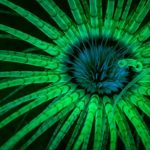
Fluorescence Image Takes 1st Place National Geographic 2017 Nature Photographer of the Year in Underwater Category
Congratulations to Jim Obester for his 1st place victory in National Geographic’s “Nature Photographer of the Year Contest” with his striking image of a tube-dwelling anemone (Cerianthus sp.).
read more »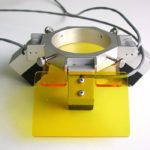
Origin of the Model SFA Stereo Microscope Fluorescence Adapter
Did you ever wonder how a new piece of equipment comes into existence? The Model SFA arose from a solution to our own marine biology research challenge.
read more »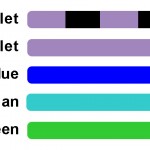
Naming and Color Coding the NIGHTSEA Wavelength Combinations
The light source and matching filters for the NIGHTSEA Stereo Microscope Fluorescence Adapter are color coded for easy application.
read more »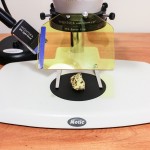
Stereo Microscope Filter Shield
Fluorescence stereo microscopes should include a protective shield. The NIGHTSEA filter shield does double duty as an eye protector and as a viewing filter.
read more »Green Bandpass Barrier Filter for the SFA
The green bandpass barrier filter option for the Stereo Microscope Fluorescence Adapter isolates the green part of the spectrum and is for use with the Royal Blue excitation source. While our other barrier filters are longpass filters, transmitting all wavelengths longer than the filter’s cutoff, this new filter transmits in the restricted range from approximately 500 to 560nm. The […]
read more »Underwater Fluorescence Diving Videos
Fluorescence night diving, Bonaire. Stills and video by Charlie Mazel using the Sola NIGHTSEA lights. Two videos, both with fantastic close-up work, by Jeff Honda. These were made using the Sola NIGHTSEA light. Video by Paul Cater Deaton off Little Cayman, made with the Sola NIGHTSEA. This video can be seen on Google Earth! This is a […]
read more »Scientific and General Interest Publications on Underwater Fluorescence
This page is a list of publications related to fluorescence effects in marine organisms. If you have suggestions for references that should be added to this list, please e-mail nightsea@nightsea.com. Popular articles/books with color photographs AW, Michael, 2002. Underwater Jungles Sarawak. OceanNEnvironment, Australia. 128 pp. Catala-Stucki, Rene, 1964. Carnival Under the Sea. R. Sicard, […]
read more »Reef Aquarium Fluorescence Links
Coral Coloration, Part 1: Fluorescence– by Dana Riddle Coral Coloration, Part 2: Fluorescence: Pigments 510 – 565 and Notes on Green Fluorescent Proteins – by Dana Riddle Coral Coloration, Part 3: Pigments Responsible for Yellow Coloration – by Dana Riddle Lateral Lines: The Seen and Unseen World of Coral Fluorescence – by Adam Blundell
read more »