

Imaging Tips for Keyence Microscopes
Recommendations for imaging fluorescence with the Keyence systems are primarily driven by the fact that the fluorescence emitted by your sample tends to be weaker than the reflected white light that the system is designed to image. This means that you will want to adjust things to either get more light to the camera, […]
read more »
Signal from Noise – A Cautionary Fluorescence Tale
It is important to understand the impact that the choice of barrier filters can have on your fluorescence images. You may even think you are seeing something that is not there.
read more »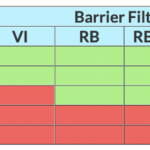
Mixing and Matching Light Heads and Filters
Guidance on mixing excitation sources and barrier filters for special applications.
read more »Adapting the SFA to Amscope Stereo Microscopes
The standard adapter ring supplied with our Stereo Microscope Fluorescence Adapter is the one piece of the system that directly attaches to your microscope. It serves as the means for mounting our modular barrier filters and filter shields. The ring attaches at the bottom of the objective housing with thumbscrews and is nearly universal. But […]
read more »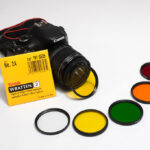
Fluorescence Photography – Camera Filters to Use with the NIGHTSEA Light Sources
Recommendations for off-the-shelf camera filters to use in combination with the NIGHTSEA excitation sources for fluorescence .photography.
read more »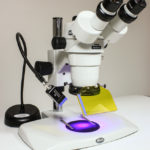
SFA vs High-End Systems for Fluorescence Stereo Microscopy
Comparing the NIGHTSEA SFA with high-end systems for fluorescence stereo microscopy
read more »
Image Subtraction to Isolate ‘Pure’ Fluorescence
Fluorescence imaging is best done in complete darkness, or at least when it is dark enough that the contribution of ambient light is so low that it is effectively completely underexposed. Sometimes that is not practical. It is not always a bad thing to have some non-fluorescent background as that can give context to an […]
read more »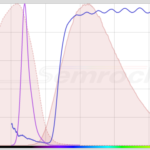
Which Excitation Should I Use for My Fluorophore?
This page provides guidance on selecting the right NIGHTSEA wavelength set for your fluorescence application.
read more »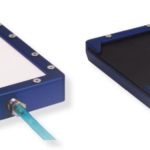
Fly Pad Fluorescence
Background fly pad fluorescence can interfere with sorting fluorescent transgenic Drosophila. We compared the background fluorescence of white and black fly pads.
read more »Why You Might Want Excitation Intensity Control
Why would you want to vary the intensity of the excitation light source? In general you want as much fluorescence as you can get! Many naturally fluorescent subjects do not glow very brightly, and the fluorescent proteins and stains used in the life sciences can range from dim to bright but tend to be […]
read more »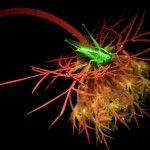
White Balance for Fluorescence Photography
A discussion of white balance selection for fluorescence photography
read more »
Light Restricting ‘Snoot’ for the SFA
In photography, a snoot is a tube or similar object that fits over a studio light or portable flash and allows the photographer to control the direction and radius of the light beam. We have created a snoot for the excitation light sources for our Model SFA Stereo Microscope Fluorescence Adapter. While the beam from […]
read more »
Longpass vs Bandpass Barrier Filter for Green Fluorescence
Trade-offs between the longpass and bandpass (green-only) filters for use with the Royal Blue excitation.
read more »Using White Light to Focus for Fluorescence
One challenge you can run into with fluorescence photography is that the fluorescence excited by the flashlight you use to find and view subjects may not be bright enough for the camera’s autofocus system. The camera focus software likes strong edges in the image to aid in focus lock and you don’t always get those in fluorescence, whether […]
read more »Adventures in Fluorescence – The Case of the Yellow Band
We were contacted to help a customer solve a fluorescence imaging problem. There was some urgency since he was on vacation. We were able to help him out quickly, and afterwards we decided to have some fun with this by posing the same challenge to our own community in the form of a puzzler. We described […]
read more »Story Behind a Fluorescence Photograph
by Charles Mazel, PhD Underwater fluorescence is beautiful and widespread. It’s not hard to find photogenic subjects and you can come back with lots of striking shots on camera – especially in this digital age. But sometimes there is more of a story behind a photograph. This is one of them. The image here is […]
read more »Diver in the Act of Taking a Fluorescence Photograph
There are many images of subjects fluorescing underwater (check out the Galleries!), but you don’t often see a photograph of a diver in the act of taking a fluorescence photograph. The photo below is from my (NIGHTSEA founder Charlie Mazel) archives of 35mm slides (I hope some of you remember film). This shot was taken at […]
read more »Will the Stereo Microscope Fluorescence Adapter Fit my Microscope?
The key elements of any fluorescence system are: a light source that produces sufficient energy in the appropriate wavelength range to excite fluorescence in the sample of interest; a barrier filter in the viewing path that blocks reflected excitation light while transmitting the fluorescence emitted by the sample. NIGHTSEA implements these in different ways […]
read more »Fluorescence Silhouette Photography
Put a non-fluorescent subject in front of a fluorescent background and what do you get? A silhouette that can have remarkable detail and make a striking and novel image. The photograph below is a great example of this. NIGHTSEA contributor Wayne MacWilliams captured this brittle star against a green-fluorescent coral while diving at Deep Blue […]
read more »Focus Stacking for Improved Depth of Field
Some kinds of photography have shallow depth of field, making it difficult to impossible to have as much of the subject in focus as you would like. This is especially true for macro photography and for photography under the microscope. The technique of focus stacking combines multiple images, each taken with a slightly different plane of focus, […]
read more »Fun with Fluorescence Photography – Chlorophyll
Anything with chlorophyll – green plants on land, seaweeds and symbiotic algae in corals underwater – emits a characteristic deep red fluorescence. Chlorophyll’s job is to capture light and convert it to chemical energy for photosynthesis, and it is very good, but not perfect, at doing that. Some of the incident light always escapes as fluorescence […]
read more »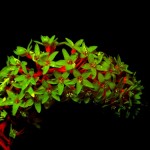
Fluorescence Photography without Darkness
Read any guide on fluorescence photography and it will tell you that it needs to be done in the dark, the darker the better. When you look at fluorescence with a good excitation light in the dark the fluorescence look bright to the eye, but in reality the emission tends to be weak and it can […]
read more »